You’ve seen the postcard: $49 AC tune-up, 21 points, book now. A truck shows up, someone spends twelve minutes in the backyard, hoses off the condenser, and hands you a $2,400 quote.
That’s why people search “are ac tune ups necessary” instead of booking one. The skepticism is earned. But the answer to what is an AC tune-up depends on who’s doing it, and the gap between a real one and a lead-generation visit is enormous.
Here’s the real checklist, by system area.
What is an AC tune-up, and what separates a real one from a sales call
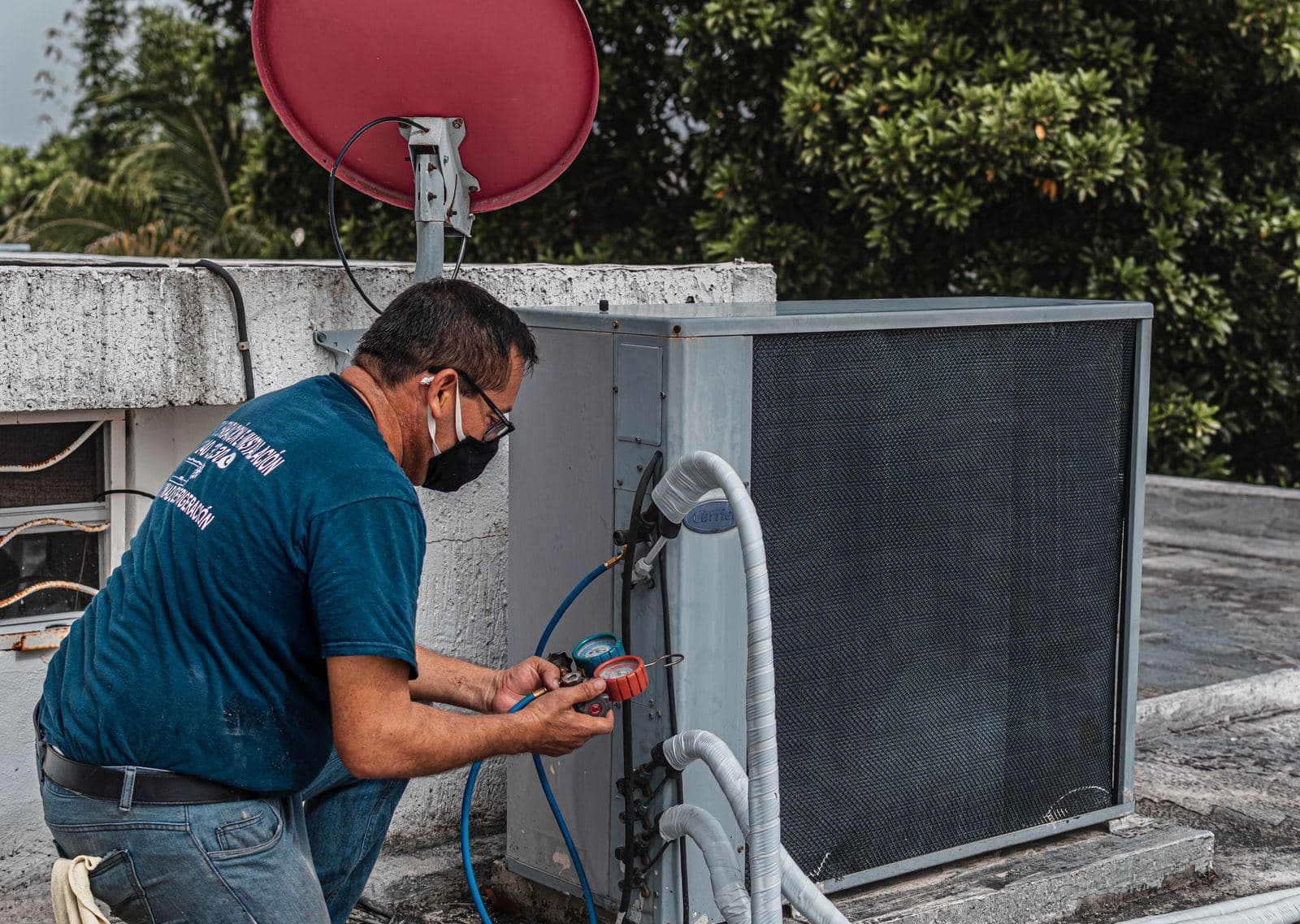
A real tune-up is a set of measurements. A technician meters the running system, compares readings to manufacturer specs, and corrects what’s out of range. A fake tune-up is a set of observations: someone looks at things, rinses the outdoor coil, swaps the filter, and spends the rest of the visit building an estimate.
So ask for the numbers. A real tune-up produces a report with capacitor readings, amp draws, temperature split, superheat or subcooling, and static pressure. If the paperwork only says “checked” and “OK,” nothing was measured.
What does an AC tune-up include?
Five system areas, and what the tech looks for in each.
Electrical
Where most summer failures start, and what a $49 visit skips.
- Capacitor microfarad test. Capacitors carry a printed tolerance, usually ±6% or ±10%. The tech pulls it, discharges it, and meters it. A 45 µF capacitor reading 38 is running your compressor today and will strand you in August. The highest-value item here.
- Contactor inspection. Its contacts pit and burn, pitting causes voltage drop, voltage drop causes heat, and heat kills compressors.
- Amp draw on compressor, condenser fan, and blower. A motor pulling at or above its nameplate rated load amperage is announcing failing bearings or windings months in advance.
- Connections tightened, wiring inspected. Loose lugs arc, and rodent-chewed low-voltage wire is common near open ground.
Refrigerant
“Topping off” is not a refrigerant check. Refrigerant isn’t consumed. If a system is low, it’s leaking.
- Superheat or subcooling. Superheat on a fixed-orifice system, subcooling on a TXV system. Both compare line temperatures against pressure-derived saturation temperatures to tell the tech whether the charge is correct, low, or high. Pressure gauges alone can’t answer that.
- Temperature split. Return air minus supply air typically lands in the 16–22°F range. A split of 8°F points at charge or airflow. A split of 28°F usually means airflow is choked.
- Leak inspection at valves, line set, and coil whenever the numbers say the charge is off. Adding refrigerant without finding the leak gets you billed twice, and the R-454B refrigerant change is making that mistake pricier.
Airflow
Airflow causes most failures people blame on the compressor.
- Condenser coil cleaned, not rinsed from three feet away. Fins packed with cottonwood, ag dust, and clippings raise head pressure and compressor amp draw.
- Evaporator coil inspected. The indoor coil builds a felt-like mat of dust. Harder to reach, routinely skipped.
- Filter checked and sized. Restrictive high-MERV filters in undersized returns are a frequent cause of frozen coils.
- Total external static pressure measured across the air handler. Most systems are engineered for roughly 0.5 inches of water column, and plenty of houses read well above it. High static is usually a duct problem, covered in our piece on duct sealing and cleaning in Fresno homes.
Drainage
Boring, cheap, and responsible for a lot of ruined ceilings. The condensate line gets cleared and flushed, the pan checked for rust and standing water, and the float switch that shuts the system down before water hits your drywall gets tested, not glanced at.
Mechanical and controls
The blower wheel gets inspected for the dust buildup that quietly strangles airflow, fan blades and bearings for play and wobble. The pad and mounts get checked, and the thermostat is calibrated and watched through a full cycle.
How much does an AC tune-up cost?
Nationally, a standalone AC tune-up runs $85 to $200, most landing near $100–$150. Central Valley pricing sits in that band; an exact number takes a look at your equipment.
What you’re buying | Typical national range | What it covers |
|---|---|---|
Single AC tune-up | $85–$200 | One cooling system, spring |
Furnace tune-up | $80–$180 | One heating system, fall |
Annual AC maintenance cost, both visits | $150–$350 | Billed separately |
HVAC maintenance plan cost | $150–$400/year | Both visits, plus discounts and priority |
“$49 special” | $49 | Usually a sales visit |
A plan is worth it when the math works, not because it’s a membership. Compare the price against the two tune-ups you’d buy anyway, then weigh the repair discount (commonly 10–20%), priority scheduling during heat waves, and whether the diagnostic fee is waived. If it costs about what both visits cost separately, those extras are free. Watch for auto-renewal at a higher rate.
Are AC tune-ups necessary? What maintenance actually prevents
Straight answer: maintenance prevents a specific set of failures and nothing else. Anyone promising a breakdown-free summer is selling.
What it prevents: frozen coils, water damage from clogged drains, compressor strain from high head pressure, and capacitor failures caught early. It also keeps efficiency from drifting, since a fouled coil makes the system work harder for the same cooling.
What it can’t prevent: a lightning strike, a factory defect, a leak that opens in July, a control board that dies without warning, or the end of a 17-year-old system’s life. Age is age.
Still a good trade. The failures it catches are the common ones.
Why annual AC maintenance pencils out in Fresno and Clovis
In a mild coastal market, skipping a year is a fair gamble. Here it isn’t, for two reasons.
Particulate loading is the first. Fresno and Clovis sit in one of the dustiest air basins in the country, with tilled ground, farm activity, and some of the worst particulate readings of any US metro. A condenser coil that would go three years elsewhere is choking after one Valley summer.
Run time is the second. Systems here work May through September, five months of near-continuous duty against 100°F-plus afternoons. Capacitors, contactors, and bearings wear on hours, not calendar years. That’s why AC repair calls in Fresno and Clovis cluster around electrical parts in July.
When to schedule your tune-up
Spring, before the June rush. March through May is the window. Book in July and you wait behind every no-cool emergency in the county, which is exactly where you should be, because a house at 95 degrees comes first.
A weak capacitor found Tuesday gets replaced Wednesday, in a window you picked. Pair it with a fall heating visit; our furnace repair guide for Fresno homes covers that side, and our HVAC maintenance service handles both.
Book spring maintenance before the heat arrives
If you want to know what shape your system is in, we’ll measure it and show you the readings, including the ones that come back fine.
Frequently asked questions
What does an AC tune-up include?
A real AC tune-up includes capacitor microfarad testing, contactor inspection, amp draw readings, superheat or subcooling measurement, temperature split, coil cleaning, filter check, static pressure, condensate drain clearing, float switch testing, and a thermostat cycle test. Ask for measured numbers, not “OK” boxes.
How much does an AC tune-up cost?
A standalone AC tune-up typically costs $85 to $200 nationally, with most single-system visits near $100–$150, and Central Valley pricing tracks that range. Maintenance plans covering a spring AC visit and a fall furnace visit generally run $150–$400 per year.
How long does an AC tune-up take?
A thorough AC tune-up takes 60 to 90 minutes for a single system, longer if the coils need real cleaning. A visit that takes 15 or 20 minutes was not a tune-up. Measuring electrical values, refrigerant charge, and static pressure simply takes that long.
Are AC tune-ups necessary?
Necessary is a strong word, but in Fresno and Clovis annual service is a good bet. Maintenance prevents frozen coils, drain overflows, high head pressure, and most capacitor failures. It can’t prevent a lightning strike or an aging compressor’s death. Given the dust and five-month cooling seasons here, yearly is reasonable.
Do you need an AC tune-up every year?
Yes, once a year is the right interval for Central Valley systems, ideally in spring. Manufacturers typically require documented annual maintenance to keep parts warranties valid, which alone justifies it on newer equipment. Homes near open fields often benefit from a mid-season coil rinse too.
Is an AC tune-up worth it?
An AC tune-up is worth it when it’s a real one. A $120 visit that catches a failing capacitor, clears a plugged drain, and cleans a loaded coil pays for itself against one emergency call. A $49 visit built to generate a quote is worth nothing.