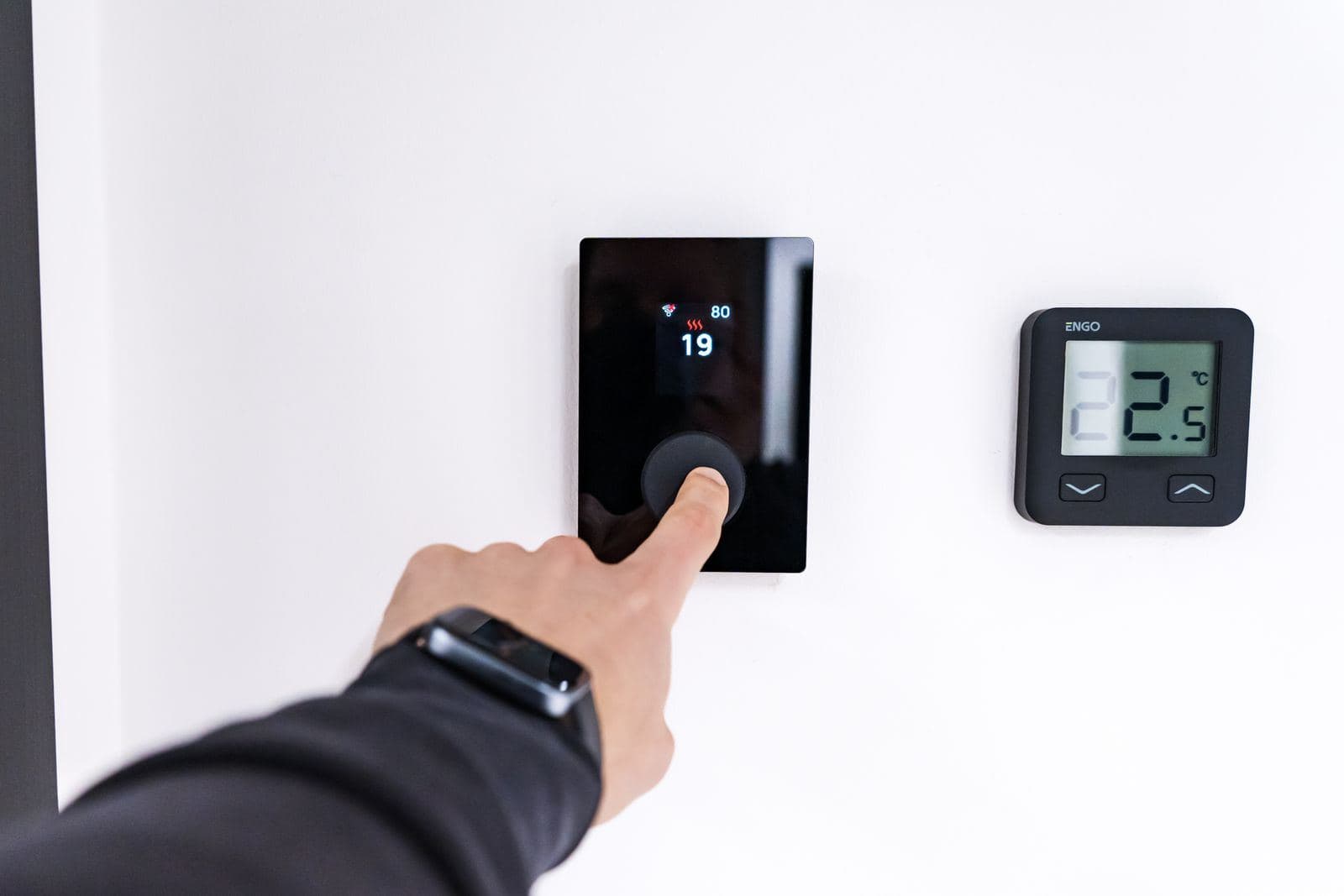
The first genuinely cold night usually lands in early December. You bump the thermostat up for the first time since March and get cold air out of the registers.
Almost every call for furnace repair in Fresno lands in that same two-week window, and there’s a reason: your furnace is more likely to fail because Valley winters are mild, not in spite of it.
A furnace idle nine months a year in one of the dustiest agricultural basins in the country accumulates problems quietly. Flame sensors film over, igniters go brittle, dust settles on the burners. Nothing shows until the night you finally ask it to run, and that’s the same night for everyone: in December every shop in the county runs two days behind.
Furnace not blowing hot air: what to check before you call
A fair share of no-heat calls end in something you could find in ten minutes. Work down this list.
- Thermostat. HEAT mode, fan on AUTO, setpoint three degrees above room temperature, fresh batteries. A weak battery can display fine and never call for heat.
- Furnace power switch. A plain light switch near the unit, often at the top of the attic stairs. It gets flipped by accident.
- Breaker. Cycle the furnace breaker fully off, then back on.
- Air filter. Valley dust starves airflow and trips the high-limit switch: the furnace fires, runs a few minutes, then quits.
- Gas supply. If the stove and water heater work, gas is on. If nothing gas-fired works, call PG&E.
- Pilot or igniter. Standing-pilot furnaces relight per the instructions printed on the unit. Anything newer has an electronic igniter and nothing to relight.
- Condensate switch. High-efficiency furnaces drain water, and a plugged line trips a float switch that locks the unit out. Standing water in the pan points here.
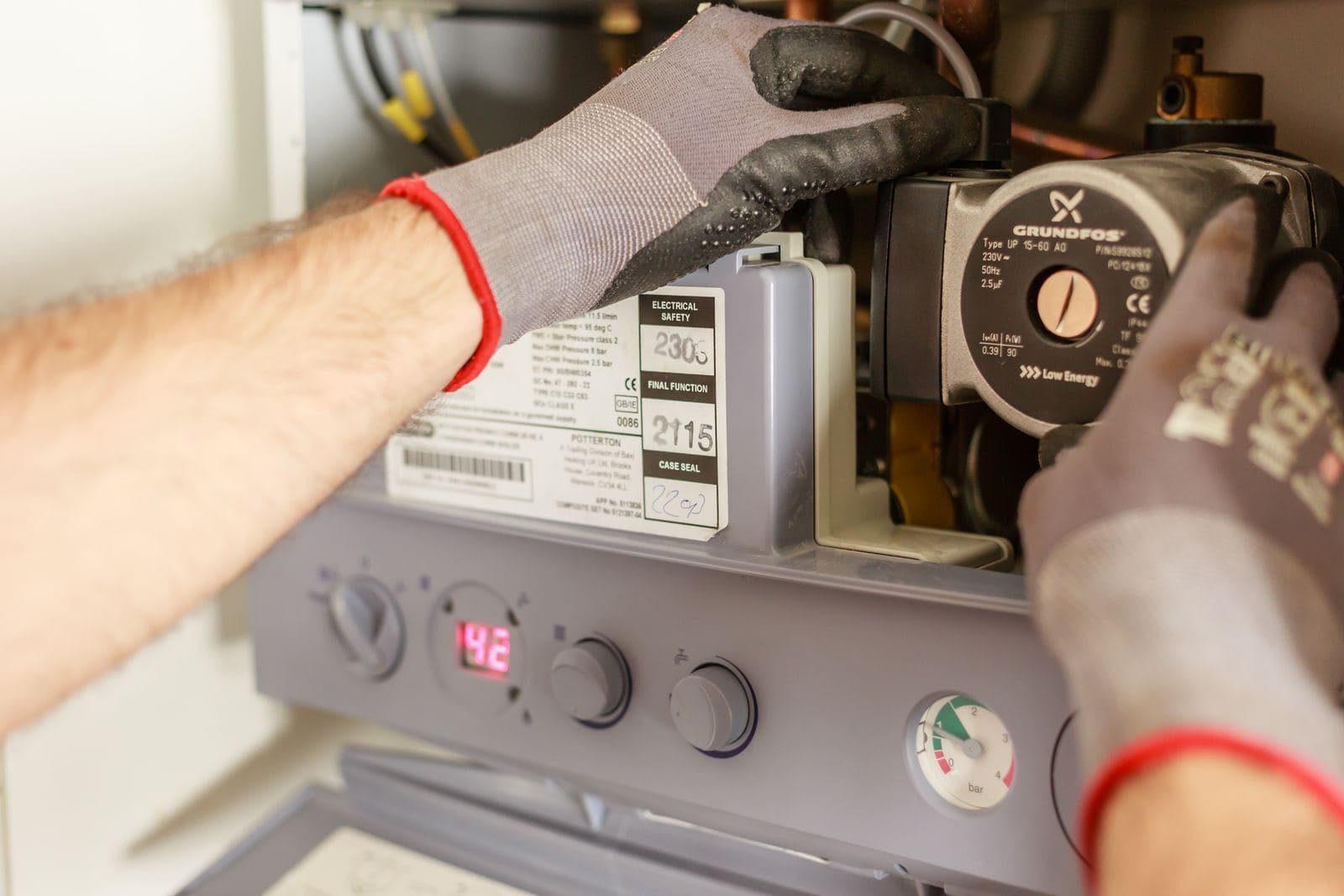
That’s the honest limit on do it yourself furnace repair: no tools, no panels, nothing gas or high-voltage. Pulling the burner cover or diagnosing a control board is technician work.
Symptom | Likely cause | Usual fix |
|---|---|---|
Cool air, blower never stops | Thermostat on FAN ON, dead igniter | Thermostat setting, igniter |
Fires, quits in 2–5 minutes | Dirty filter or flame sensor | Filter, cleaning, limit switch |
Clicks but never lights | Igniter, gas valve, control board | Igniter, valve, or board |
Nothing at all, no sound | Breaker, power switch, door switch | Reset or replacement |
Boom on startup or sooty smell | Combustion problem | Inspection, same day |
How much does furnace repair cost?
Nationally, most single-issue furnace repairs land between $150 and $700, averaging in the low $400s. Diagnostic fees run $75–$200, often credited toward the work. Central Valley pricing sits near the national middle, higher on evenings and weekends.
Repair | Typical national range |
|---|---|
Flame sensor cleaning or replacement | $80–$250 |
Hot surface igniter | $150–$450 |
Thermostat replacement | $150–$500 |
Gas valve | $300–$850 |
Control board | $400–$1,000 |
Blower motor | $450–$1,500 |
Heat exchanger | $1,000–$3,500+ |
Those are ranges, not quotes. A furnace crammed into a 1950s central Fresno hall closet costs more in labor than one in a Clovis garage, and an exact number takes an in-home look.
Carbon monoxide and a cracked heat exchanger
Everything else on a furnace is a comfort and money problem. This one isn’t, so read it as a safety briefing, not a pitch.
The heat exchanger is the metal wall separating the flame and its exhaust from the air you breathe. When years of heating cycles crack that metal, exhaust can reach the airstream. It carries carbon monoxide: colorless, odorless, nothing your nose or throat can react to.
Low-level exposure looks like flu without a fever: headache, dizziness, fatigue, nausea, confusion. The tell is that symptoms ease when you leave the house and return when you do, and that more than one person or pet feels it.
CO alarms. California law requires them in homes with a fossil-fuel appliance, fireplace, or attached garage. Put one outside each sleeping area and at least one on every level. CO mixes evenly with room air, so mounting height matters far less than for smoke alarms. Test monthly and replace the alarm at its stated end of life, usually five to ten years. If one sounds, get everyone outside, call 911 from there, and don’t go back in to investigate.
Worth a same-day look even without an alarm: a yellow or flickering burner flame instead of steady blue, soot around the furnace or vents, rust or scaling on the exchanger. A heat exchanger crack isn’t confirmed by eye; techs verify it with a combustion analyzer and camera, standard practice in competent heating repair in Fresno. A confirmed crack gets the unit red-tagged and shut off. That’s correct, not an upsell.
Repair or replace your furnace
Most gas furnaces last 15 to 20 years, and units here often outlast that, given how few hours they run. Start with the multiply-by-age rule: age in years times the repair quote. Over roughly $5,000, lean toward replacement. Then layer on:
- A confirmed heat exchanger crack on a unit past 12 years almost always means replacement. The part is expensive, the labor heavy, and you’d be rebuilding the core of a system near the end anyway.
- Repeat failures. Two significant repairs in two seasons is a pattern, not bad luck.
- Age of the AC. If the air conditioner sharing that ductwork is also near the end of its life, doing both at once shares labor. Our guide to what a new system costs in Fresno applies to furnace installation in Fresno too.
Heat pump vs air conditioner for Central Valley winters
A heat pump is nearly the same machine as an air conditioner, plus a reversing valve: it moves heat out of the house in summer and in from outdoor air in winter.
The heat pump vs air conditioner question comes down to your winters, and Fresno and Clovis winters are close to ideal. Overnight lows in the 30s and 40s sit well inside a modern heat pump’s efficient range, and cold-climate models produce usable heat below freezing. One system covers both seasons, with no gas combustion or heat exchanger to crack. The tradeoffs: higher cost up front, and PG&E rates that make the comparison against gas less lopsided than elsewhere.
Our heating installation and repair service walks both paths, including when keeping your furnace is the smarter money. Either way, get eyes on it before December: the same annual tune-up visit that saves your AC catches the brittle igniter and filmed-over sensor.
Schedule furnace repair in Fresno or Clovis
If your furnace is blowing cool air, cycling off early, or making a noise it didn’t make last winter, we’ll diagnose it, tell you the cost before we start, and give a straight repair-or-replace answer. If a heat exchanger is involved, you get combustion readings, not a pitch.
Frequently asked questions
How much does furnace repair cost?
Most furnace repairs cost $150 to $700 nationally, averaging in the low $400s. Igniters, flame sensors, and thermostats sit at the low end; blower motors, control boards, and gas valves run higher. Diagnostic fees add $75–$200, usually credited toward the repair.
How much does it cost to repair a furnace versus replace it?
Multiply the furnace’s age in years by the repair quote. Above roughly $5,000, replacement usually makes more sense. A 7-year-old furnace with a $400 repair scores 2,800 and is worth fixing. An 18-year-old furnace with a $2,000 heat exchanger is not.
Who to call for furnace repair?
Call a licensed C-20 HVAC contractor. California requires that license for heating work, and you can verify any number with the Contractors State License Board. Look for a stated diagnostic fee, a written quote before work, and a tech who shows you the part.
How much is furnace repair if it’s just the igniter?
A hot surface igniter typically runs $150 to $450 installed, including the diagnostic. It’s among the most common no-heat failures and one of the cheapest. Igniters are brittle ceramic parts that fail from age and thermal cycling, which is why they break on the first cold night.
Who can repair my furnace in Clovis or Fresno?
Any licensed HVAC contractor serving the area, though availability is the real constraint. During the first cold snap, companies handling furnace repair in Clovis and Fresno run two to three days behind. Mention it if someone at home is elderly or medically fragile.
What counts as safe do it yourself furnace repair?
You can safely check the thermostat mode and batteries, reset the breaker, confirm the furnace power switch is on, replace a dirty filter, verify other gas appliances work, and clear a plugged condensate drain. Anything behind the burner cover needs a licensed technician.