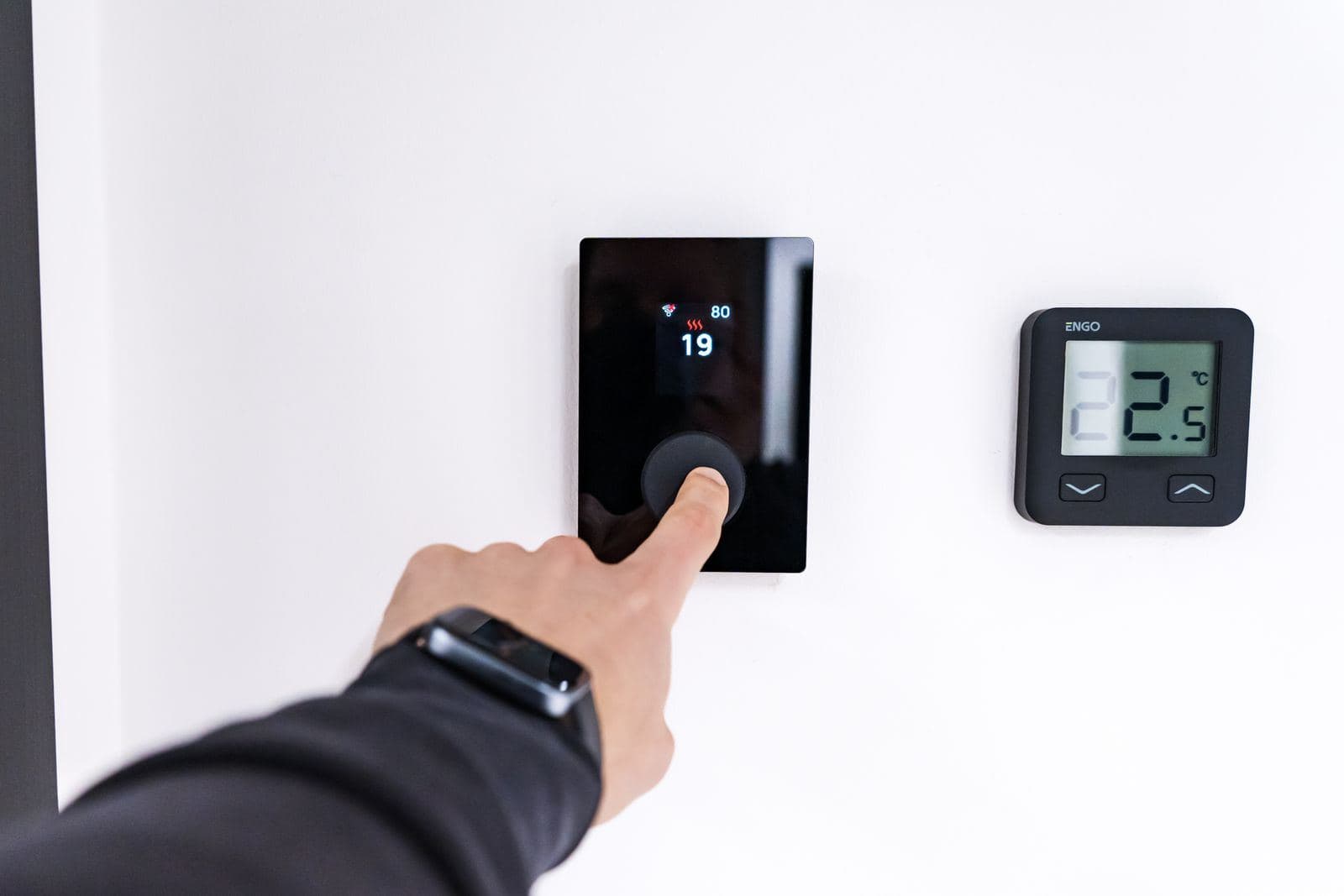
It’s 107 degrees, the thermostat says 78, and the house says otherwise. Air is moving out of the vents, but it’s room temperature.
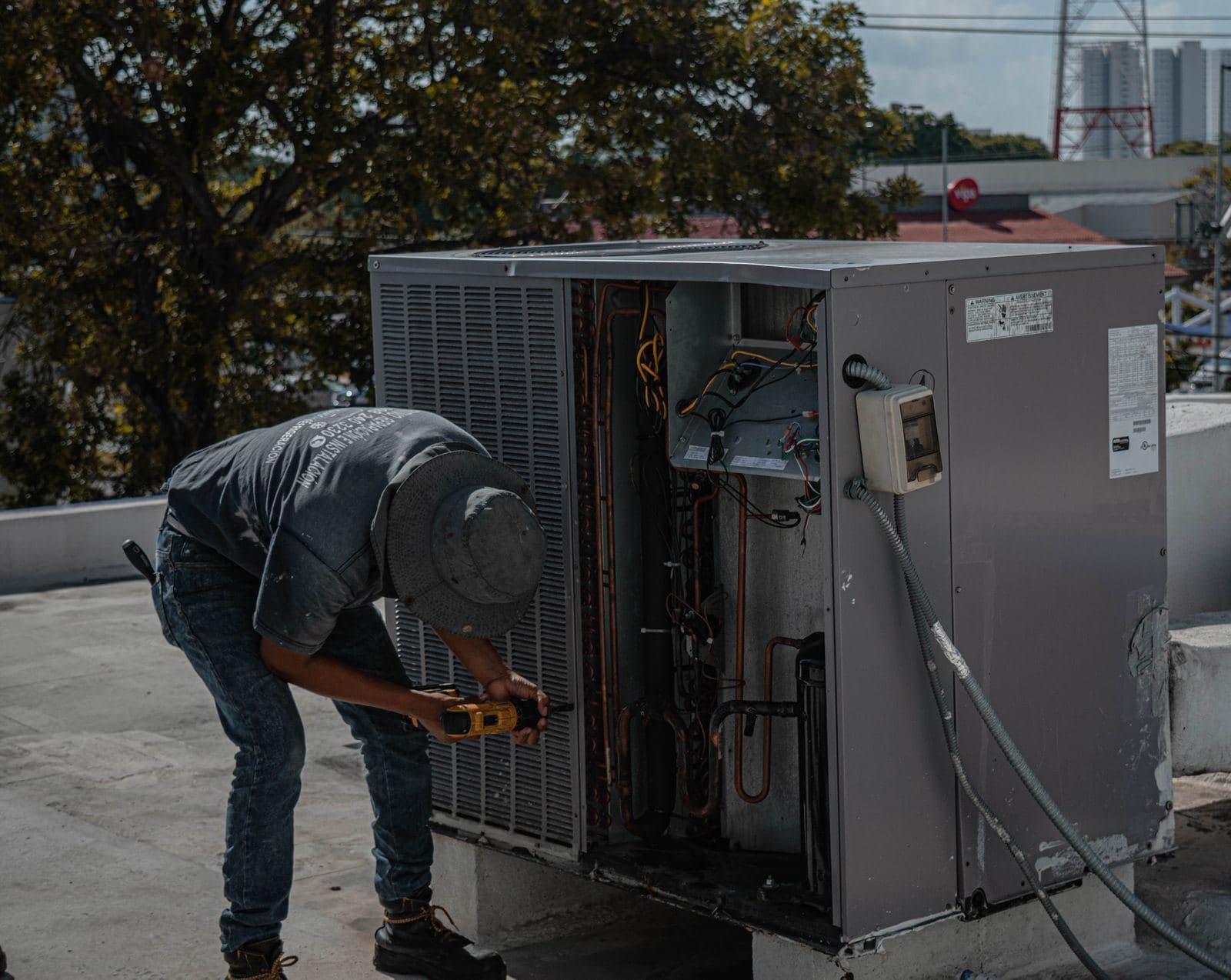
Most AC repair in Fresno comes down to a short list of failures: capacitors, contactors, blower motors, refrigerant leaks, clogged drains, dirty coils. A good tech names the suspect within fifteen minutes of walking up to the condenser. This page lets you build that same list before anyone arrives, so you can tell a fair quote from a bad one.
Symptom, cause, likely fix
Find your symptom and read across.
What you’re seeing | Most likely causes | Usual fix | Check yourself? |
|---|---|---|---|
AC blowing warm air | Failed capacitor, tripped condenser breaker, refrigerant leak, dirty condenser coil, failed compressor | Capacitor or contactor swap, leak repair, coil cleaning, or compressor | Yes — breaker and filter |
AC short cycling (runs 3–5 min, stops, repeats) | Dirty filter or coil choking airflow, low refrigerant, failing capacitor, oversized system | Restore airflow, repair the leak, replace the capacitor | Yes — change the filter |
AC making loud noise | Squeal: bearings. Grinding: blower or fan motor. Buzz: contactor or capacitor. Bang: loose blower wheel or compressor | Motor, bearing, contactor or capacitor replacement | Note the sound, shut it off |
Frozen AC coil (ice on coil or copper line) | Restricted airflow, plugged filter, low refrigerant, blower motor failure, closed registers | Thaw, then find the root cause; no top-off without a leak search | Yes — cooling off, fan on |
No power, won’t turn on | Tripped breaker, blown low-voltage fuse, dead thermostat, tripped float switch, failed transformer | Fuse or transformer replacement, drain clearing to reset the float | Yes — breaker and batteries |
Water pooling indoors | Clogged condensate drain, cracked pan, frozen coil melting, disconnected drain line | Drain clearing and flush, pan repair, fixing the freeze | Yes — shut the system off |
A frozen AC coil and warm air are often the same failure at different stages: airflow drops, the coil ices over, the ice blocks airflow entirely, and you get room-temperature air. Running the system while it’s iced up is how a $200 capacitor call becomes a compressor conversation.
How much does AC repair cost?
Nationally, most single-issue repairs land between $150 and $650, with the average call in the mid-$300s. Diagnostic fees run $75–$200 and are often credited toward the work. Central Valley pricing sits near the national middle; after-hours and peak-summer rates run higher.
Repair | Typical national range | Notes |
|---|---|---|
Capacitor | $150–$400 | Most common summer failure |
Contactor | $150–$400 | Often replaced alongside a capacitor |
Condensate drain clearing | $100–$250 | Expensive only if it floods a ceiling |
Condenser fan motor | $400–$900 | Heat and dust shorten motor life here |
Blower motor | $450–$1,500 | Variable-speed ECM motors top the range |
Refrigerant leak repair | $250–$1,500+ | Depends on where the leak is |
Evaporator coil | $650–$2,500 | Often where replacement math flips |
TXV / metering device | $300–$800 | Mimics low refrigerant charge |
Compressor | $1,300–$2,900+ | Under warranty, you may pay labor only |
Those are ranges, not quotes. Your number depends on the part, the brand, whether the system still carries a parts warranty, and how accessible the equipment is. An exact figure takes an in-home diagnosis.
Refrigerant deserves a note. R-410A is being phased down under federal HFC rules, and new systems now use lower-GWP refrigerants like R-454B, so recharge costs on older equipment keep climbing. Our guide to the R-454B refrigerant change explains what that means for repair decisions.
Repair or replace?
The most useful rule in this trade is the $5,000 rule: multiply the system’s age in years by the repair quote. Over $5,000, replacement is usually the better spend.
A 6-year-old unit with a $400 repair scores 2,400: fix it. A 14-year-old unit with an $1,800 coil scores 25,200, and that money belongs in new equipment.
Then layer these on:
- Warranty. Many systems carry 10-year parts coverage for the original registered owner. A warrantied compressor changes everything.
- Repair history. Two failures in two years on aging equipment is a pattern.
- Refrigerant type. On an R-22 system, parts and refrigerant are both scarce and expensive. Replace.
- Operating cost. A 2005-era 10 SEER unit costs meaningfully more to run than current equipment, which in California must meet a 14.3 SEER2 minimum for split systems.
- Timing. In July, “replace” can mean days without cooling. Sometimes the answer is repair now, replace in the shoulder season.
How long do AC units last?
Most central systems last 12 to 17 years. In Fresno and Clovis, plan closer to the low end. Equipment here runs four to five months a year against 100°F-plus temperatures, and agricultural dust loads coils and blower wheels faster than almost anywhere else. A unit that gets an annual tune-up and clean filters outlasts a neglected one by years.
One thing worth checking while you have the system apart: on most Valley homes the air conditioner and the furnace share a cabinet, a blower, and the same ductwork. If the AC is nearing end of life, it’s worth knowing the condition of the heating side of the system before you decide how much to spend on either one.
If the math points to replacement, our breakdown of what a new system costs in Fresno tells you what to budget first.
What a 110-degree day changes
When the Valley hits 105–110°F, a dead AC stops being a comfort problem. Extreme heat is one of the deadliest weather hazards in the country, and the risk concentrates in older adults, infants, and people with heart or lung conditions. A shaded Fresno house can pass 90°F indoors in hours.
If that describes someone in your home, say so when you call. During a heat wave, every company doing air conditioning repair in Fresno and Clovis is running a backlog, and dispatchers move vulnerable households up the list.
While you wait: close blinds on the sun side, run fans, hydrate, stay in the coolest room. Fresno County opens cooling centers during declared heat events.
Who to call for AC repair
Pick a company before you need one. At 108 degrees, you take whoever answers.
- Licensed and insured. California requires a C-20 HVAC license. Verify the number with the Contractors State License Board.
- Diagnostic fee stated upfront, and whether it’s credited toward the repair.
- Written, itemized quote before work starts.
- They show you the failed part. A good tech hands you the swollen capacitor.
- No refrigerant top-off without a leak search. Refrigerant isn’t consumed. If it’s low, it’s leaking.
- They’ll tell you when not to buy. “It’s a $300 fix, you’ve got a few years left” beats any discount.
The warning signs are the reverse: replacement pitched before diagnosis, quotes given only as a monthly payment, a failed compressor claimed without evidence. Our AC repair service covers Fresno, Clovis, and the surrounding Valley, with pricing given before work begins.
Get a straight answer on your system
If your AC is blowing warm air, icing up, or making a noise it never used to make, we’ll diagnose it, tell you the cost before we touch it, and give you an honest repair-or-replace answer — including when the answer is “don’t spend the money yet.”
Call 559-832-6540 or email us to schedule AC repair in Fresno or Clovis. Licensed and insured, CA Lic. 1007938. 2895 S Chestnut Ave, Fresno, CA 93725.
Frequently asked questions
How much does AC repair cost?
Most AC repairs cost $150 to $650 nationally, averaging in the mid-$300s. Capacitors and contactors sit at the low end; compressor replacement runs $1,300–$2,900 or more. Diagnostic fees add $75–$200 and are often credited toward the repair. Central Valley pricing tracks national averages, with higher after-hours summer rates.
How much to repair an AC unit versus replace it?
Use the $5,000 rule: multiply the unit’s age in years by the repair quote. Over $5,000, replacement is usually the smarter spend. A 5-year-old system with a $500 repair scores 2,500 and is worth fixing. A 15-year-old system with a $1,500 repair is not.
How long do AC units last?
Most central air conditioners last 12 to 17 years. In Fresno and Clovis, expect 10 to 15 — systems here run four to five months a year against extreme heat, and valley dust accelerates coil and motor wear. Annual maintenance and clean filters reliably add years.
How do you repair a home AC yourself?
You can safely change the air filter, reset a tripped breaker, clear weeds from around the condenser, replace thermostat batteries, and rinse the outdoor coil with a low-pressure hose. Anything involving refrigerant, capacitors, or wiring needs a licensed technician — capacitors hold a dangerous charge even with the power off.
Who to call for AC repair?
Call a licensed C-20 HVAC contractor who states the diagnostic fee upfront, gives a written itemized quote before starting, and shows you the failed part. Verify the license with the California Contractors State License Board. If someone in the home is elderly or has a heart condition, say so when you call.
Why is my AC short cycling?
AC short cycling — running a few minutes, shutting off, restarting — usually comes from restricted airflow due to a dirty filter or coil, low refrigerant from a leak, or a failing capacitor. Start with a fresh filter. If it continues, call a technician: short cycling wears a compressor down fast.